
What Happens After a College Admission Essay Review (How to Use Feedback Without Rewriting Everything)

After a college essay review, you don't rewrite everything, you sort the feedback first. Group big-picture concerns like structure and clarity ahead of grammar or word choice, and weight advice from teachers and counselors more heavily than casual readers. Fix comments that affect meaning before touching sentence-level edits. Protect your voice by rejecting suggestions that make your writing feel stiff or unfamiliar. Keep what's working, and revise what isn't. The steps below show how to revise without starting over.
Key Takeaways
Sort feedback into big-picture issues and sentence-level edits, then tackle meaning-level changes before addressing grammar or style.
Weight feedback from teachers and counselors more heavily, and group repeated concerns since multiple readers flagging the same issue signals a real problem.
Deep revision is only needed when structure is illogical, the main point is unclear, or the prompt goes unanswered.
Reject edits that replace your natural phrasing or perspective; only accept feedback that sharpens meaning without compromising voice.
Save each draft separately so previous phrasing and story details are never permanently lost during revisions.
If your draft still needs basic structural work, start with our college admission essay revision checklist before applying outside feedback.
What to Expect in Your College Essay Feedback
When you receive feedback on your college essay, it typically covers several key areas, each serving a distinct purpose. Knowing what reviewers look for helps you understand which comments matter most.
Different reviewer types focus on different things. Some start with big-picture concerns like prompt fit, theme, and purpose. Others move through content first, then check flow, voice, and clarity. Most will flag weak structure, unclear sections, missing context, or moments where your writing loses its personal feel.
You'll also likely see line-level notes on grammar, word choice, and sentence rhythm. Think of feedback as a map, not a judgment. Each comment points to something specific, so you can address individual areas without rebuilding your essay from scratch. Revision stages follow a clear order: start with high-level message and content adjustments before moving to structure, then tone and style, and finally grammar and line-level fixes.
Counselors bring a particularly valuable perspective to this process because they have reviewed many essays and can offer guidance on whether your prompt choice aligns with your strengths and interests. Seeking input from teachers or counselors provides fresh perspectives that can help you evaluate your essay's overall interest and flow from an admissions standpoint.
How to Rank College Essay Feedback Before You Revise
Feedback without a clear ranking system can pull your revision in too many directions at once. Before you touch a single sentence, build a simple priority matrix that sorts every comment into categories: big-picture issues first, sentence-level edits last.
Start by applying a reader hierarchy. Weight advice from teachers or counselors who understand admissions writing more heavily than comments from well-meaning friends or family. Then group repeated concerns together, since multiple readers flagging the same issue signals a real problem.
Next, ask yourself whether each comment changes what your essay is about or only how it sounds. Meaning-level changes belong in your first revision pass. Grammar and style fixes wait until your structure and story are solid. Work in that order, and you'll revise smarter. When working through feedback, it helps to know that experienced teachers often focus each revision cycle on just one element at a time, such as the thesis statement, before moving on to other parts of the essay.
To avoid losing good ideas during revision, save each draft as a separate document so you can return to earlier phrasing or story details if a new direction doesn't work out. Keep in mind that clarity and coherence in your final draft help admissions officers quickly understand your story and leave a lasting impression.

Not sure what to do with your essay feedback?
Alexis College Expert can help you sort through comments, protect your voice, and revise your college essay without starting over.
Which Comments Are Worth Acting On (And Which to Skip)
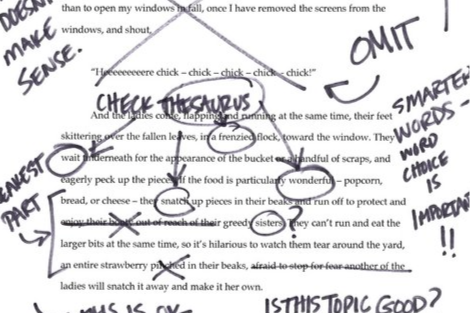
Not all feedback deserves equal attention, and acting on the wrong comments can push your essay further from where it needs to be. Prioritize notes about clarity, reflection, and specificity.
If a reader can't identify your main point or role in the story, that's a real revision. Comments asking for concrete examples or a stronger "so what" are worth addressing, since admissions readers want insight, not just a timeline of events.
Skip feedback that's purely about personal taste or wording preferences, especially if the change would compromise voice preservation. Your natural tone is an asset. If your draft feels disorganized after feedback, return to yourcollege admission essay outline template before editing sentence by sentence.
Advice driven by what a reviewer finds stylistically appealing isn't always reliable. Focus on comments that make your essay clearer, more specific, and more genuinely yours. For example, if a reviewer flags that character names cause confusion, that's a functional clarity issue worth fixing rather than a matter of taste.
Also weigh feedback against whether your essay still reflects honest and genuine qualities, since admissions officers are looking for students whose unique voices and motivations come through naturally rather than those who appear to be writing for impression.
When Your College Essay Needs Deep Revision vs. Light Edits
Once you've sorted through your feedback and identified the comments worth acting on, your next step is figuring out how much work the essay actually needs. Not every draft requires the same level of attention.
Deep revision is necessary when your main point is unclear, your structure lacks logic, or your essay only partially answers the prompt. If fixing the draft means moving or replacing multiple paragraphs, that's revision territory.
Light editing applies when the core story is already working but needs tone adjustment, stronger word choices, or smoother narrative pacing between paragraphs. These are surface-level fixes that preserve your voice rather than redesign the draft.
A quick test: read the essay aloud. Stumbling usually signals structural problems. Slight awkwardness usually signals editing needs. Keeping these two tasks separate allows you to give each one undivided attention and produce a more polished final draft.
Early revision should focus on large structural and content changes, because sentence-level edits are best treated as finishing touches once the bigger issues are resolved. During this stage, check whether your essay anchors itself to a specific turning point rather than summarizing broad development across several experiences.
How to Revise Your College Essay Without Losing Your Voice

Revision doesn't have to mean rewriting yourself out of the essay. Start with structure before touching word choice. Fix how ideas flow from one paragraph to the next before you adjust a single sentence. Once the organization holds, focus on clarity, not polish.
Protect your voice by keeping authentic phrasing that sounds like you. If a suggested edit makes a sentence feel stiff or unfamiliar, reject it. Read your draft aloud to check tempo preservation; if the rhythm breaks or a line feels forced, that's a sign the revision went too far. Reading aloud also helps you identify errors and clarity issues that are easy to miss when skimming silently.
Accept feedback that sharpens meaning, not feedback that replaces your perspective with someone else's. Admissions officers are looking for authenticity over vocabulary, so resist the urge to swap simple, natural words for obscure synonyms just to sound more sophisticated. Your essay should still sound like you wrote it, because you did. A quick voice check can help you decide whether the revised draft still sounds like you.
How to Write a Second College Essay Draft Without Starting Over
When you sit down to write a second draft, resist the urge to start from a blank page. Your first draft already contains your core idea, and that's worth keeping. Think of revision as layered drafting. You are building on what works instead of starting from scratch.
Start by identifying your essay's strongest lines and clearest moments. These become your foundation. Then practice thematic pruning by cutting details that don't connect to your central point. If a sentence doesn't support your main idea, remove it without hesitation.
Let the draft rest for a few hours or a few days before revising. Distance helps you spot weak transitions and bloated sections more easily. Revise one section at a time, focusing on structure first, then sentence flow. Use your college admission essay revision checklist to cut repeated ideas before polishing individual sentences.
How to Know Your College Essay Is Ready to Submit

After several drafts, you'll reach a natural pause where only minor wording changes remain. That's usually your signal. When rereading no longer reveals structural problems or missing ideas, the essay is close to done.
Check for reader clarity by reading aloud. If sentences flow without stumbling, the writing sounds like you, and the story feels complete, you're nearly there. Emotional resonance matters too, the essay should feel honest, not performative.
Run a quick submission checklist before finalizing. Confirm the essay answers the full prompt, matches your application's overall story, adds something new, and contains no spelling or grammar errors. Print it out for a final line-level read.
Admissions officers prioritize authenticity and topic quality over which prompt you chose, so make sure your final essay still sounds like your natural voice rather than an adult rewrite. When every sentence feels settled and editing starts feeling unnecessary, stop. The essay is ready.
College Essay Feedback Checklist
Before you revise, sort your feedback with this checklist:
Which comments affect the main point of the essay?
Which comments affect structure or paragraph order?
Which comments ask for more specific details?
Which comments improve clarity?
Which comments are only grammar or word choice edits?
Which suggestions make the essay sound less like the student?
Did more than one reader flag the same issue?
Does the essay still answer the prompt after revisions?
Does the revised draft still sound natural when read aloud?
Did you save the original draft before making major changes?
What Happens After a College Admission Essay Review
You've done the hard work. Now it's about refining, not reinventing. Use feedback as a map, not a mandate, take what strengthens your story, and leave what doesn't. Trust the voice that got you this far. Once the essay is clear, specific, and still sounds like you, make your final edits and submit. The best version of your essay is the one that actually sounds like you.
College Essay Review FAQ
Should I rewrite my whole college essay after feedback?
Not usually. Most students should sort the feedback first, fix the biggest structure or clarity issues, and only rewrite sections that no longer support the main point.
What feedback should I use first after a college essay review?
Start with feedback about prompt fit, structure, clarity, and specificity. Grammar and word choice should come after the essay’s main idea is clear.
How do I know if essay feedback is good?
Good feedback makes the essay clearer, more specific, and more authentic. Feedback that makes the essay sound stiff, generic, or unlike the student should be used carefully.
Can too much feedback hurt a college essay?
Yes. Too many opinions can make the essay sound overworked. The best revisions improve clarity while keeping the student’s voice intact.